
Modern industrial automation systems rely on processing stability and verified physical reliability to maintain continuous operation across demanding manufacturing environments. Engineering teams frequently deploy 32-bit platforms because they combine predictable execution with extensive manufacturing maturity. Ensuring project viability requires aligning hardware specifications directly with procurement strategies from early prototyping through full-scale commercial manufacturing runs.
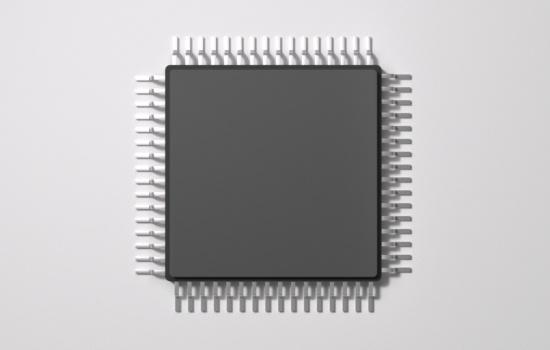
Embedding the STM32F103RCT6 into production platforms gives manufacturers access to a standardized processing architecture built for industrial equipment. Success in commercial deployment depends on understanding device limits while establishing dependable sourcing pipelines. Procuring silicon without verifying component availability and provenance exposes assembly operations to costly delays and operational disruption.
Silicon Architecture: 32-Bit Processing and Program Memory
Operating at a 72 MHz clock frequency, the ARM Cortex-M3 processor delivers deterministic control for industrial equipment applications. That 32-bit processing core executes instructions steadily across continuous duty cycles. Automation designers select this STMicroelectronics architecture to maintain reliable timing across critical factory processes without introducing unexpected software bottlenecks.
On-chip program storage plays a central role in preserving code stability within harsh electrical environments. Integrating 256 KB Flash memory allows developers to store application code, communication stacks, and field update configurations locally. Retaining all primary operational instructions within internal Flash memory simplifies board routing, minimizes external component counts, and optimizes execution efficiency.
System designers favor the ST STM32F1 series because its architectural maturity provides a proven foundation for long-lifecycle industrial products. Standardized firmware libraries and established development workflows accelerate testing across multiple engineering phases. Deploying proven processing cores reduces validation time during prototype builds, minimizes redevelopment expenses, and helps engineering teams meet demanding delivery milestones.
Physical Footprint and Environmental Reliability Across the 64-LQFP Package
Board real estate constraints demand compact packaging solutions that maintain straightforward assembly handling. Housed in a 64-LQFP form factor, the STM32F103RCT6 enables dense board layouts without requiring complex circuit fabrication. Leaded surface-mount geometry allows engineers to route electrical connections efficiently across compact controllers while maintaining mechanical stability under heavy industrial operation.
Surface-mount assembly workflows benefit significantly from the mechanical accessibility of quad flat packages. Manufacturing technicians and automated optical inspection systems easily examine perimeter solder joints to ensure reliable electrical bonding. Standard packaging formats such as trays, cut tape, and tape-and-reel options facilitate automated pick-and-place placement during high-volume manufacturing runs.
Moisture Sensitivity Level 3 packaging requires structured handling to prevent internal delamination during automated surface-mount reflow soldering. Adhering to strict floor-life storage limits preserves package integrity prior to exposure to high-temperature thermal profiles. Proper moisture control ensures that leaded surface-mount integrated circuits maintain physical integrity through standard convection reflow ovens.
Operating temperature ratings spanning from -40°C to +85°C protect embedded hardware against extreme thermal environments. Industrial machinery regularly encounters ambient temperature swings inside unventilated control enclosures and factory floors. Microcontrollers qualified for this operating temperature range sustain normal computational execution despite severe external heat fluctuations, ensuring continuous uptime in harsh settings.
Supply Chain Volatility and Counterfeit Vulnerabilities in Mature Silicon
Extended production cycles expose industrial equipment manufacturers to periodic shortages across mature semiconductor nodes. Fabrication facilities frequently allocate capacity toward newer silicon geometries, leaving established 32-bit microcontrollers subject to extended factory lead times. Sourcing managers must monitor component allocations actively and maintain multi-channel procurement strategies to prevent unexpected assembly line stoppages.
Unvetted open-market sources frequently introduce refurbished, damaged, or deceptively remarked integrated circuits into commercial supply channels. Counterfeit devices fail to meet stated operational standards, introducing latent defects that trigger field equipment failures. Substandard components inflate warranty liabilities, degrade product reputation, and erode end-user confidence in mission-critical industrial automation brands.
Partnering with an established MCU supplier protects production schedules by securing verified inventory through disciplined procurement channels. Experienced distributors monitor factory lead times, track obsolescence notifications, and locate authentic components across international distribution hubs. Transparent supply agreements shield manufacturing operations from spot-market price volatility and unexpected factory delivery delays.
Managing procurement hurdles requires collaboration with distributors capable of navigating global component availability. Unibetter distributes a wide range of electronic components to support industrial manufacturers facing inventory constraints and tight production windows. Broad sourcing reach enables procurement teams to circumvent regional shortages, secure available stock, and maintain continuous assembly operations without compromising traceability.
Strategic Vendor Qualification: Authenticity Assurance and Cost Optimization
Rigorous incoming inspection standards represent the foundation of dependable component distribution. Auditing a prospective MCU supplier requires verifying traceable documentation, intact factory packaging, and structured warehouse storage environments. Maintaining strict environmental and moisture controls preserves terminal solderability and protects sensitive silicon from electrostatic discharge and physical handling damage.
Eliminating intermediary supply risks requires sourcing directly through validated manufacturer distribution channels. Unibetter sources and procures electronic components from franchised sources to guarantee 100% authentic, quality-assured and brand-new electronic components. Securing certified factory stock ensures that each microcontroller meets published performance ratings, preventing costly assembly line shutdowns and premature field hardware failures.
Commercial negotiations require structured purchasing approaches to shield bill-of-materials budgets from inflated broker premiums. Focused on supporting customers to locate needed electronic components and acquire them at lower costs, Unibetter assists manufacturing teams in maintaining budget discipline across extended production schedules. Stable pricing models allow equipment builders to honor customer delivery commitments without incurring unexpected production cost overruns.
Engineering and Supply Alignment for Long-Term Manufacturing
Aligning verified hardware specifications with disciplined procurement practices ensures continuous manufacturing viability for industrial embedded systems. Engineering teams achieve computational reliability using proven 32-bit architectures, while procurement professionals protect assembly lines from volatile market conditions and unvetted stock. Establishing resilient vendor partnerships safeguards product quality and secures dependable production from initial launch through sustained volume delivery.