

“Ninety or Ninty” is a common spelling confusion in English. Ninety is the correct way to spell the number 90. Ninty is a misspelling and not accepted in proper writing. Many people make this mistake when writing quickly.
Have you ever typed ninty and wondered if it was right? You’re not alone. This small error happens to students, writers, and even professionals. It’s easy to fix once you know the rule.
The mistake often comes from how the word sounds when spoken. Ninety can sound like ninty in fast speech. But spelling must follow correct English rules. Learning the right form helps improve your writing.
Why It’s “Ninety” and Not “Ninty”
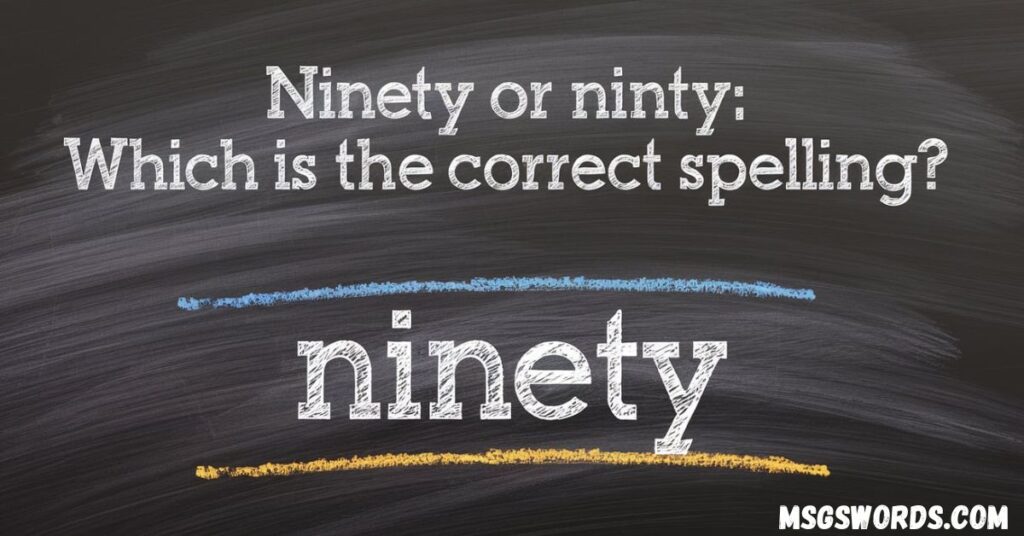
The word ninety is the standard and correct spelling in English. It follows the established pattern for numbers ending in “-ty,” such as twenty, thirty, and forty. The confusion arises because, when spoken quickly, “ninety” can sound like “ninty,” leading to the misspelling. However, the correct form retains the “e” from the base number “nine,” making “ninety” the proper choice.
Understanding the Origin of “Ninety”
Old English Roots
The number 90 in Old English was spelled “nigon-tig”, combining “nigon” (nine) and “tig” (a group of ten). Over time, this evolved into the modern English “ninety.” The retention of the “e” in “ninety” reflects the historical development of the word and maintains consistency with other number spellings.
Why Spelling Accuracy Matters
Professionalism in Writing
Using the correct spelling demonstrates attention to detail and professionalism. Misspellings, such as “ninty,” can undermine the credibility of your writing, especially in formal documents like reports, emails, and academic papers.
Clarity in Communication
Correct spelling ensures that your message is clear and understood as intended. Misspellings can cause confusion or misinterpretation, leading to potential misunderstandings.
The Common Confusion: Why People Write “Ninty”
Phonetic Similarities
The primary reason for the misspelling “ninty” is phonetic similarity. When spoken, “ninety” can sound like “ninty,” especially in rapid speech, leading to the incorrect spelling.
Misunderstanding Spelling Rules
English spelling rules can be inconsistent, and the pattern for numbers ending in “-ty” doesn’t always align with pronunciation. For example, “twenty” and “thirty” don’t have an “e” before the “y,” which might lead to the incorrect assumption that “ninety” should follow the same pattern.
Practical Tips to Avoid Writing “Ninty”
1. Mnemonics for Memory
Creating a mnemonic can help remember the correct spelling. For instance, “There’s an ‘e’ in ‘nine,’ so keep it in ‘ninety.'” This reinforces the idea that the “e” from “nine” should be retained in “ninety.”
2. Leverage Technology
Utilize spell-check tools like Grammarly or built-in spell checkers in word processors. These tools can catch common misspellings and suggest corrections.
3. Proofread Aloud
Reading your writing aloud can help identify errors that might be overlooked when reading silently. This practice can catch phonetic mistakes like “ninty.”
4. Practice Writing
Regularly practicing writing numbers in words can reinforce correct spelling. Writing out numbers like “ninety,” “twenty,” and “thirty” can help internalize the correct forms.
Read More: Family’s or Families’ or Families? A Simple Guide
The Impact of Misspellings in Real Life

Examples of Miscommunication
In professional settings, misspelling numbers can lead to significant misunderstandings. For example, writing “ninty” instead of “ninety” in a financial report could cause confusion about amounts, leading to potential errors in budgeting or accounting.
Formal vs. Casual Writing
In formal writing, such as academic papers or business communications, accuracy is crucial. Misspellings can detract from the professionalism of the document. In casual writing, while the impact may be less severe, consistent spelling still contributes to clarity and readability.
The Importance of Language Consistency
Maintaining consistent spelling, especially for commonly used words like numbers, helps ensure that your writing is clear and professional. Consistency in spelling also aids in readability and comprehension, making your writing more effective.
Practical Applications of “Ninety”
Examples in Context
- “The temperature today is ninety degrees.”
- “She received ninety percent on her final exam.”
- “There are ninety students in the auditorium.”
Using Numbers and Words
In formal writing, it’s often appropriate to spell out numbers up to ten, but for numbers above ten, numerals are typically used. However, when starting a sentence with a number, it’s standard to spell it out. For example, “Ninety students attended the seminar.”
Commonly Misspelled Words and Their Causes
Other commonly misspelled words in English include:
- “Definately” instead of “definitely”
- “Seperately” instead of “separately”
- “Recieve” instead of “receive”
These errors often stem from phonetic spelling and inconsistent English spelling rules.
Frequently Asked Questions (FAQs)
Is it Ninty or ninety in English?
Ninety is the correct spelling; ninty is a common misspelling.
What is correct, fourty or forty?
Forty is the correct spelling; fourty is incorrect and not used in standard English.
What is the correct spell of 90?
The correct spelling of 90 in English is ninety.
Is it Ninty Four or ninety four?
The correct spelling is ninety four; ninty four is incorrect.
Final Thoughts on “Ninety or Ninty”
In conclusion, “ninety” is the correct spelling of the number 90 in English. The misspelling “ninty” arises from phonetic similarities and misunderstandings of English spelling rules. By understanding the origins of “ninety,” recognizing common spelling mistakes, and employing strategies like mnemonics and proofreading, you can avoid this error and enhance the professionalism and clarity of your writing.